Riverstone Commercial Build-Out: Market District, Town Center & Retail Development Guide
Riverstone Commercial Build-Out: Market District, Town Center & Retail Development Guide
Complete Look at Shopping, Dining, Services & Business Development Coming to Riverstone Madera
📋 Table of Contents
One of Riverstone's most compelling promises is comprehensive on-site retail, dining, and services—reducing trips to Madera and Fresno for everyday needs. But commercial development takes time and follows a strategic timeline tied to residential growth. This guide explores every commercial district at Riverstone, what businesses are coming, when they'll open, surrounding area development, and what it means for your daily life and home value.
🏪 Commercial Development Overview
Riverstone's commercial infrastructure represents approximately 118+ acres of retail, dining, entertainment, and services across three major districts—more commercial space than many small towns. This isn't token retail; it's a comprehensive business ecosystem designed to serve 21,000 residents.
The Three Commercial Districts:
| District | Size | Focus | Timeline |
|---|---|---|---|
| Market District | 43 acres | Grocery, retail, essential services | 2026-2030 |
| Town Center | ~30 acres | Dining, cafes, boutiques, main street | 2028-2032 |
| Urban District | 45 acres | Entertainment, nightlife, mixed-use | 2032-2037 |
Why 118+ Acres of Commercial Space?
To put this in perspective:
- Typical Neighborhood Shopping Center: 10-15 acres (one grocery anchor, few shops)
- Riverstone's Market District Alone: 43 acres (3× typical shopping center)
- Total Commercial: 118+ acres serves as commercial infrastructure for a small city
- Comparable: Similar to commercial space serving incorporated towns of 15,000-25,000
🎯 Self-Sufficiency Goal: Riverstone's commercial strategy aims for 70-80% self-sufficiency—meaning residents can handle 70-80% of daily needs (grocery, dining, services, entertainment) without leaving the community. The remaining 20-30% (specialty shopping, major purchases, work commutes) still requires trips to Fresno/Madera. This level of on-site convenience is rare in suburban Central Valley development.
Current Status (2025):
- Market District: Planning and tenant recruitment phase
- Town Center: Master planning complete, awaiting population density
- Urban District: Long-term planning, 10+ years out
- Surrounding Area: Some external retail development occurring on Highway 41 corridor
🛒 Market District (43 Acres) IN PLANNING
Overview:
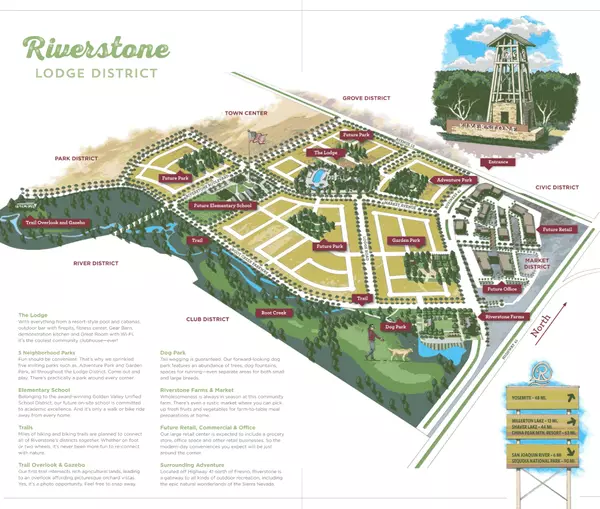
The Market District is Riverstone's primary neighborhood retail center—a 43-acre suburban-style shopping complex designed to handle everyday needs. Think of it as Riverstone's version of a typical suburban shopping center, but built specifically for the community.
Site Details:
- Size: 43 acres (approximately 1.8 million square feet of potential development)
- Location: Central to Riverstone for easy access from all neighborhoods
- Access: Direct connection to Highway 41 for external customers
- Parking: Ample surface parking typical of suburban retail
- Design: Traditional strip center and anchor pad configurations
Planned Anchor Tenants:
🏬 Major Retailers (Anchor Positions)
- Grocery Store: National or regional chain (50,000-60,000 sq ft) - Candidates: Raley's, FoodMaxx, Save Mart, or Sprouts
- Pharmacy: CVS, Walgreens, or Rite Aid (15,000 sq ft with drive-thru)
- Dollar Store: Dollar Tree, Dollar General, or Family Dollar (10,000 sq ft)
- Pet Supply: Petco or PetSmart (15,000 sq ft)
- Fitness Center: Anytime Fitness, Planet Fitness, or similar (10,000-15,000 sq ft)
Supporting Retail & Services:
🍔 Food & Dining
- Fast Food: 5-8 franchises (McDonald's, Taco Bell, Chick-fil-A, Chipotle, Panda Express)
- Fast Casual: 3-5 concepts (Panera, Mod Pizza, Wing Stop, Jersey Mike's)
- Coffee: Starbucks, Dutch Bros, or local coffee house
- Casual Dining: 2-3 sit-down restaurants (Applebee's, Red Robin, Buffalo Wild Wings)
- Bakery: Donut shop, local bakery, or Nothing Bundt Cakes
💇 Personal Services
- Hair Salon: Great Clips, Supercuts, or local salon
- Nail Salon: Independent or chain nail spa
- Dry Cleaning: Local or regional dry cleaner
- Urgent Care: Walk-in medical clinic
- Dental Office: Family dentistry practice
- Vision Center: Optometrist or vision retail
🏦 Financial & Professional
- Banks: 2-3 branches with ATMs and drive-thrus
- Insurance: State Farm, Farmers, Allstate offices
- Real Estate: Local brokerages and agents
- Tax Services: H&R Block or local CPA
🛍️ Specialty Retail
- Convenience Store: 7-Eleven, Circle K, or independent
- Gas Station: Major brand with convenience store
- Auto Services: Oil change, car wash, auto parts
- Phone Store: Verizon, AT&T, or T-Mobile retail
- UPS/FedEx: Shipping and mailbox services
Development Timeline:
- 2025-2026: Final planning, tenant recruitment, financing secured
- 2026-2027: Infrastructure and pad site development
- 2027-2028: Grocery anchor construction and opening
- 2028-2030: Phase 2 retailers and restaurants open
- 2030-2033: Final build-out of all 43 acres
What Triggers Market District Development:
Commercial developers need population density to justify investment. Market District moves forward when:
- 1,500-2,000 occupied homes in Riverstone (sufficient customer base for grocery anchor)
- 5,000-7,000 residents (critical mass for diverse retail)
- Surrounding Southeast Madera growth (external customers supplement Riverstone residents)
- Pre-leasing commitments (anchor tenants signed before groundbreaking)
- Economic conditions favorable (construction costs, financing, retail sector health)
🛒 Grocery Store Priority: The grocery store anchor is the Market District's linchpin. Once a major grocer commits (Raley's, Save Mart, etc.), development accelerates rapidly. The grocery anchor attracts supporting retailers who want to locate near high-traffic food shopping. Expect the grocer to open 6-12 months before most supporting tenants. Current best estimate: 2027-2028 for grocery opening.
🏙️ Town Center PLANNED
Overview:
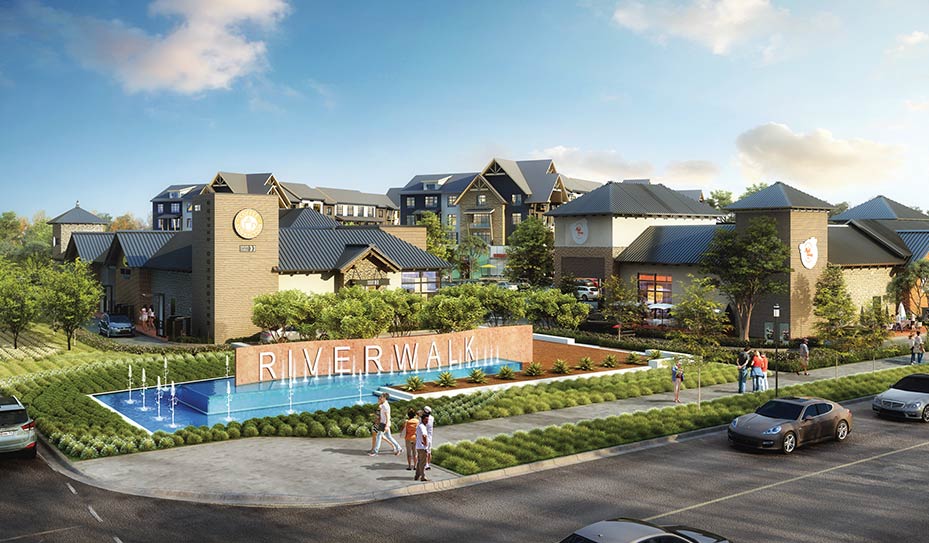
Town Center represents Riverstone's pedestrian-friendly, main street-style mixed-use core. Unlike the suburban Market District, Town Center emphasizes walkability, outdoor dining, boutique retail, and creating a "downtown" atmosphere within Riverstone.
Design Concept:
- Pedestrian-First: Wide sidewalks, limited car access, outdoor seating everywhere
- Mixed-Use Buildings: Retail/restaurants ground floor, potential offices or residential above
- Human Scale: 2-3 story buildings creating intimate, walkable environment
- Public Spaces: Central plaza or square with fountains, seating, event space
- Street Activation: Outdoor dining, window shopping, people-watching encouraged
- Architectural Character: Cohesive design theme (Mediterranean, California contemporary, or similar)
Planned Businesses & Uses:
☕ Dining & Social
- Restaurants: 6-10 sit-down concepts ranging from casual to upscale
- Coffee Houses: 2-3 cafes with indoor and outdoor seating (morning gathering spots)
- Ice Cream/Desserts: Gelato, froyo, or traditional ice cream parlor
- Wine Bar: Adult evening gathering spot with small plates
- Brewpub/Taproom: Local craft beer and pub food
- Bistro/Cafe: All-day breakfast and lunch concept
🛍️ Retail & Boutiques
- Clothing Boutiques: 3-5 shops (women's fashion, men's casual, children's)
- Home Goods: Decor, furnishings, lifestyle items
- Bookstore: Independent bookshop with coffee bar
- Art Gallery: Local art and crafts
- Gift Shop: Unique items, cards, seasonal merchandise
- Jewelry: Fine jewelry or artisan jewelry
🎭 Entertainment & Culture
- Live Music Venues: Small stages in plaza or dedicated music venue
- Event Space: Farmers market, outdoor movies, holiday events
- Community Room: Classes, meetings, private events
- Public Art: Sculptures, murals, interactive installations
Day-to-Night Programming:
Town Center is designed for activity throughout the day:
- Morning (7am-11am): Coffee crowds, breakfast spots, people heading to work
- Midday (11am-2pm): Lunch crowds, business meetings, remote workers in cafes
- Afternoon (2pm-5pm): Retail shopping, after-school ice cream, moms meeting for coffee
- Evening (5pm-9pm): Dinner crowds, wine bar scene, date nights, family dining
- Weekends: Farmers markets (mornings), brunch crowds, shopping, live music, events
Development Timeline:
- 2026-2028: Final design and tenant recruitment
- 2028-2029: Phase 1 infrastructure and first buildings
- 2029-2031: Initial restaurants and shops open
- 2031-2033: Full build-out and complete activation
What Triggers Town Center Development:
- 2,500-3,000 occupied homes (sufficient customer base for destination dining)
- 10,000+ residents (critical mass for boutique retail and entertainment)
- Market District operational (basic needs met, Town Center becomes discretionary spending)
- Restaurant concepts committed (dining is Town Center's primary draw initially)
- Economic prosperity (Town Center dining/shopping is discretionary spending)
🌆 Main Street Revival: Town Center brings the "main street" concept to suburban Madera County—a pedestrian-friendly zone where you can walk, dine, shop, and socialize without getting in a car. This urbanism is rare in Central Valley suburbs and creates a sense of place that conventional strip malls lack. However, it requires significant population density and discretionary spending to sustain, which is why it follows Market District by several years.
🌃 Urban District (45 Acres) LONG-TERM PLANNED
Overview:
The Urban District is Riverstone's most ambitious commercial vision—a 45-acre entertainment, dining, and mixed-use zone designed to bring urban energy and nightlife to Southeast Madera County. This district targets residents seeking entertainment beyond shopping and casual dining.
Planned Entertainment & Venues:
🎭 Entertainment Anchors
- Movie Theater: Multi-screen cinema (8-12 screens) showing latest releases
- Bowling/Entertainment Center: Modern bowling with bar, arcade, laser tag, or similar
- Live Music Venue: 500-1,000 capacity space for touring acts and concerts
- Sports Bar: Large-format TVs, multiple sports packages, full bar and food
- Arcade/Gaming: Modern gaming center (VR, esports, traditional arcade)
🍽️ Dining & Nightlife
- Upscale Restaurants: Fine dining and special occasion venues
- Trendy Concepts: Current/modern cuisine styles (fusion, farm-to-table, celebrity chef concepts)
- Nightclubs/Lounges: 21+ venues for evening entertainment
- Late-Night Dining: Restaurants open beyond typical suburban hours (until midnight or later)
- Craft Cocktail Bars: Mixology-focused establishments
🏢 Office & Mixed-Use
- Professional Offices: 2-3 story office buildings for corporate/professional tenants
- Co-Working Spaces: Shared offices for remote workers and entrepreneurs
- Tech Startups: Modern office space for growing businesses
- Conference Facilities: Meeting and event spaces for business use
🏘️ Residential (Potential)
- Urban Housing: Condos, townhomes, or apartments above commercial
- Live-Work Units: Combined residential and office/retail space
- Young Professional Housing: Studios and 1-bedrooms appealing to singles and couples
Development Timeline:
- 2030-2032: Conceptual planning and early tenant discussions
- 2032-2034: Phase 1 entertainment anchors (theater, bowling) construction
- 2034-2037: Dining, nightlife, and office spaces develop
- 2037-2040: Final build-out including potential residential
What Triggers Urban District Development:
- 4,500-5,000 occupied homes (15,000+ residents for entertainment venues)
- Market District and Town Center thriving (basic and casual needs met)
- Demographic diversity (young professionals, empty nesters seeking nightlife)
- Regional draw (Urban District serves broader Southeast Madera, not just Riverstone)
- Entertainment anchors committed (movie theater or bowling center needs significant investment)
🎯 Long-Term Vision: The Urban District is 10-15 years away (2032-2037 earliest). This district represents Riverstone's transformation from suburban master-planned community to mini-city with urban amenities. Most master-planned communities never achieve this level of entertainment infrastructure. Urban District success depends on Riverstone reaching critical mass (15,000+ residents) and becoming a regional destination drawing customers from surrounding Madera County areas, not just Riverstone itself.
🌍 Surrounding Commercial Development
While Riverstone develops its internal commercial districts, the broader Southeast Madera County area is also experiencing retail and business growth along the Highway 41 corridor. This external development complements Riverstone's commercial infrastructure.
Highway 41 Corridor Growth:
The Highway 41 corridor south of Madera (where Riverstone is located) is seeing increased commercial interest:
- Gas Stations: New fuel stations opening to serve growing population
- Fast Food: Major chains considering Highway 41 locations near Riverstone
- Auto Services: Car washes, oil change, auto repair shops
- Self-Storage: Storage facilities serving residents
- Small Retail: Strip centers and standalone businesses
Existing Nearby Commercial:
Currently available within short drive:
- City of Madera (8 minutes): Full retail including Walmart, Target, restaurants, services
- Fresno (27 minutes): Comprehensive shopping including malls, specialty retail, entertainment
- Oakhurst (45 minutes): Gateway to Yosemite with tourist-focused retail and dining
How External Development Affects Riverstone:
- Fills Gaps During Build-Out: External retail serves Riverstone residents until internal commercial opens
- Supplements Riverstone Retail: Even with 118 acres, some needs require trips to Fresno (specialty shopping, major purchases)
- Competition: External retail may compete with Riverstone businesses, but also validates the area's commercial viability
- Regional Growth Signal: External development shows developer confidence in Southeast Madera County
Riverstone's Commercial Advantage:
Despite external competition, Riverstone's internal commercial has advantages:
- Captive Audience: 6,578 homes (21,000 residents) within walking/short driving distance
- Integrated Design: Commercial districts designed specifically for Riverstone residents
- Walkability: Can walk or bike to Riverstone retail; can't do that with Highway 41 strip centers
- Community Identity: Riverstone businesses become part of community fabric
- Quality Control: HOA and design standards maintain quality and character
📅 Commercial Development Timeline
This timeline shows the projected sequence of commercial development at Riverstone. Actual timing depends on residential absorption, economic conditions, and tenant commitments.
2025-2026: Planning & Preparation
- Market District final design and entitlements
- Tenant recruitment for grocery anchor and major retailers
- Town Center conceptual planning
- Residential growth continues (aiming for 1,500-2,000 occupied homes)
2027-2028: Market District Launch
- Grocery store anchor construction and opening
- First phase supporting retail (pharmacy, gas station, fast food) opens
- Initial services (bank, hair salon) operational
- 2,000-2,500 homes occupied providing customer base
2029-2030: Market District Build-Out
- Additional restaurants and retail opening
- Professional services expanding (medical, dental, offices)
- Market District approaching 60-70% occupancy
- Town Center groundbreaking preparation
2031-2033: Town Center Development
- First Town Center buildings and restaurants open
- Coffee houses, bistros, and cafes operational
- Boutique retail beginning to populate
- 3,000-3,500 homes occupied supporting dining/entertainment
2034-2036: Commercial Maturation
- Market District fully leased (90%+ occupancy)
- Town Center 60-80% built out and operational
- Urban District planning and early tenant discussions
- 4,500+ homes supporting diverse commercial ecosystem
2037-2040: Urban District & Completion
- Urban District entertainment anchors open (theater, bowling)
- Upscale dining and nightlife venues operational
- All three commercial districts substantially complete
- 6,000+ homes (approaching full build-out) supporting full commercial mix
⏰ Timeline Variables: This timeline assumes steady residential absorption (~300-400 homes/year), favorable economic conditions, and successful tenant recruitment. Delays can occur due to: slower housing sales, recession/economic downturns, difficulty securing anchor tenants, financing challenges, or permitting delays. Conversely, stronger-than-expected demand could accelerate timelines. Use this as a guide, not a guarantee.
🤔 Why Commercial Development Follows Residential
A common question: "Why can't Riverstone build the commercial districts now?" The answer lies in commercial real estate economics and risk mitigation.
Population Density Requirements:
Retailers need guaranteed customer volume before investing millions:
| Business Type | Minimum Population Needed | Reasoning |
|---|---|---|
| Grocery Store | 5,000-7,000 people | Daily shopping, needs high volume |
| Gas Station | 3,000-5,000 people | Frequent use, moderate investment |
| Casual Restaurant | 5,000-10,000 people | Discretionary dining, needs traffic |
| Movie Theater | 15,000-25,000 people | Entertainment, high investment |
| Bowling Alley | 20,000-30,000 people | Major entertainment, huge investment |
Financial Risk and Investment:
- Grocery Store: $5-10 million investment; can't risk opening before sufficient residents
- Restaurant: $500K-2M investment; needs proven traffic to justify
- Movie Theater: $10-20M investment; requires regional draw
- Retail Center: $30-50M+ investment; banks won't finance without population data
The Chicken-and-Egg Problem:
Commercial development faces a circular challenge:
- Residents say: "We won't buy homes until there's retail and restaurants nearby"
- Retailers say: "We won't open stores until there are enough residents to support us"
- Solution: Residential leads, proving population density, then commercial follows
How Riverstone Mitigates the Gap:
- Lodge District First: Amenities operational before commercial, providing lifestyle value
- Nearby Existing Retail: Madera (8 min) and Fresno (27 min) serve residents during build-out
- Strong Value Proposition: Lower home prices and resort amenities compensate for commercial delay
- Clear Timeline: Transparency about commercial development helps set expectations
- Highway 41 Growth: External retail developing nearby fills some gaps
💡 Early Buyer Trade-Off: Early Riverstone buyers accept 3-5 years without on-site retail in exchange for lower home prices and maximum appreciation potential. By the time Market District opens (2027-2028), early buyers will have enjoyed 3-5 years of equity growth that more than compensates for driving to Madera for groceries. Later buyers pay more but get immediate retail access. It's a trade-off, not a flaw.
🏠 How Commercial Development Impacts Daily Life
Life Before Market District Opens (2025-2027):
- Grocery Shopping: Drive to Madera (8 min) or Fresno (27 min) weekly
- Gas: Fill up in Madera or nearby Highway 41 stations
- Dining Out: Drive to Madera or Fresno for restaurants
- Services: Hair salons, doctors, shopping all require leaving Riverstone
- Time Cost: 30-60 min additional drive time per week for errands
Life After Market District Opens (2028+):
- Grocery Shopping: Walk, bike, or 2-minute drive within Riverstone
- Gas: Fill up without leaving community
- Quick Meals: Fast food and fast casual within Riverstone
- Basic Services: Hair, nails, banking, pharmacy all on-site
- Time Savings: 20-40 min per week saved; fewer trips to Madera
Life After Town Center Opens (2031+):
- Date Nights: Walk to dinner and wine bar without driving to Fresno
- Coffee Culture: Morning coffee and remote work in walkable cafes
- Social Life: Meet friends at Riverstone restaurants and shops
- Entertainment: Farmers markets, live music, events all within community
- Lifestyle Shift: Riverstone becomes destination, not just bedroom community
Life After Urban District Opens (2037+):
- Full Entertainment: Movies, bowling, concerts without leaving Riverstone
- Upscale Dining: Special occasions handled on-site
- Work Opportunities: Office spaces create local employment
- Complete Community: 70-80% of needs met within Riverstone
🎯 The 70-80% Rule: Even with full commercial build-out, Riverstone won't meet 100% of needs. You'll still drive to Fresno for: major shopping (clothing, furniture, electronics), specialty retailers, major medical appointments, entertainment variety (multiple movie choices, diverse dining), and work commutes (unless employed locally). But handling 70-80% of daily needs within Riverstone represents significant convenience and time savings compared to typical suburban living.
💰 Commercial Development & Property Values
Commercial development significantly impacts property values in master-planned communities. Understanding this relationship helps inform investment decisions.
Value Impact by Phase:
- Pre-Commercial (2025-2027): Values driven by home quality, amenities (Lodge), location, appreciation potential
- Market District Opening (2027-2028): 5-10% value lift as convenience factor improves dramatically
- Market District Mature (2029-2030): Additional 3-5% as full retail mix established
- Town Center Opening (2031-2033): 5-8% lift as lifestyle and "sense of place" enhance
- Full Build-Out (2037-2040): 3-5% final appreciation as Urban District completes
- Cumulative Effect: 15-30% total appreciation attributable to commercial development over 15 years
Why Commercial Drives Values:
- Convenience Premium: Buyers pay more for walkable retail and services
- Time Savings: Reduced commuting for errands has real economic value
- Lifestyle Appeal: Town Center dining and entertainment attract affluent buyers
- Competitive Advantage: Few Central Valley communities offer Riverstone's commercial infrastructure
- Sense of Place: Commercial districts create community identity beyond just housing
- Reduced Costs: Less driving means lower gas, vehicle wear, and time opportunity costs
Proximity Premium:
Homes closer to commercial districts may command premiums:
| Location | Premium | Trade-Off |
|---|---|---|
| Walking Distance to Town Center | +$10K-$30K | Some noise from restaurants/events |
| Near Market District | +$5K-$15K | More traffic, commercial activity |
| Interior Residential (Quiet) | Baseline | More peaceful, less walkable to retail |
| Adjacent to Urban District | Variable | Nightlife noise concerns |
Investment Strategy:
- Early Buyers: Purchase before commercial opens, benefit from full appreciation cycle
- Patient Investors: Hold through commercial development to maximize value
- Location Choice: Decide if commercial proximity premium worth noise trade-off
- Long-Term Hold: 7-10 year hold captures most commercial-driven appreciation
📈 Historical Data: Studies of master-planned communities show that successful on-site commercial development typically adds 15-35% to property values over the build-out period compared to communities without internal retail. Riverstone's 118 acres of commercial space positions it well for strong commercial-driven appreciation, but this assumes successful tenant recruitment, economic stability, and population growth to support businesses.
❓ Frequently Asked Questions
Q: Why isn't there a timeline for specific stores or restaurants?
A: Tenant recruitment happens 1-2 years before opening, and businesses don't announce publicly until leases are signed. Riverstone can't guarantee specific retailers before contracts are finalized. However, the types of businesses listed (grocery chains, fast food, banks) are standard for projects of this size and typically fill these spaces. Specific brands will be announced as leases are executed, likely 2026-2027 for Market District tenants.
Q: What if the commercial districts don't develop as planned?
A: While rare for successful master-planned communities, commercial development could be scaled back if residential absorption is slower than expected or economic conditions worsen significantly. However, Riverstone's population density (21,000 at build-out) virtually guarantees commercial viability—it's a matter of timing, not if. The bigger risk is delayed timelines rather than complete failure to develop.
Q: Can I influence what businesses come to Riverstone?
A: Limited influence. Riverstone's developers recruit tenants based on market research and leasing economics, not resident surveys. However, strong resident advocacy (petitions, community meetings) can signal demand for specific retailers. Businesses also monitor social media and community engagement. Your best influence is living there—the more residents Riverstone has, the more attractive it becomes to retailers you want.
Q: Will commercial development increase HOA fees?
A: No. Commercial districts are separate from HOA—businesses pay property taxes and commercial assessments, not HOA fees. Your HOA covers residential amenities (Lodge, parks, landscaping), not commercial infrastructure. In fact, commercial development may stabilize or reduce HOA fees by spreading infrastructure maintenance costs across a larger tax base and bringing additional county revenue to the area.
Q: What if I buy a home and commercial never opens?
A: You still own a home in an award-winning community with resort amenities, excellent schools, and strong appreciation potential. Commercial development enhances Riverstone but isn't the sole value proposition. Many successful communities have limited on-site retail but thrive due to location, quality, and amenities. That said, Riverstone's scale (6,578 homes, 21,000 residents) makes commercial development nearly certain—it's economically viable and expected.
Q: How does commercial development compare to other Central Valley communities?
A: Riverstone's 118+ acres of commercial is exceptional for Central Valley master-planned communities. Most suburban developments have 10-30 acres of retail at most. Mountain House (San Joaquin County) has similar comprehensive commercial planning. Riverstone's three-district approach (Market, Town Center, Urban) is ambitious and positions it as one of the region's most complete master-planned communities.
Q: Will nearby external retail compete with or complement Riverstone's commercial?
A: Both. External Highway 41 retail may compete for some customers but also validates the area's commercial viability and fills gaps during Riverstone's build-out. Riverstone's advantage is walkability and community integration—you can't walk to Highway 41 strip centers from your Riverstone home. Most successful communities have both internal and nearby external retail coexisting.
Q: When should I expect the grocery store to open?
A: Best estimate: 2027-2028. The grocery anchor is critical and requires 1,500-2,000 occupied homes (5,000-7,000 residents) to justify investment. At current build pace (300-400 homes/year), Riverstone should reach this threshold by late 2026/early 2027, triggering grocery store commitment. Construction takes 12-18 months, suggesting 2027-2028 opening. This is the earliest realistic timeline; delays could push to 2028-2029.
Q: What about traffic from commercial development?
A: Commercial districts will generate traffic, concentrated during peak hours (lunch, dinner, weekends). However, Riverstone's design includes: dedicated commercial access from Highway 41 (reducing residential street impact), internal circulation designed for commercial traffic, and parking requirements ensuring off-street capacity. Homes near commercial areas will experience more traffic than interior residential neighborhoods—consider this in lot selection if noise-sensitive.
Q: Can commercial development be expedited if I and other residents push for it?
A: No. Commercial development is driven by economics (population density, tenant commitments, financing), not resident demand alone. Developers want commercial to succeed as much as you do—they make money from retail leases. The constraint is financial viability, not lack of effort. However, strong resident spending at future Riverstone businesses (when they open) helps retain tenants and attract additional retailers, creating positive momentum.
Ready to Join Riverstone's Commercial Future?
Understanding commercial development timelines helps you make informed decisions. Whether you buy now and wait for retail, or wait until Market District opens, knowing the roadmap helps align expectations with reality.
View Available Homes Tour the Community Download Development Timeline❓ What Commercial Features Matter Most to You?
After learning about Riverstone's commercial build-out, which district are you most excited about? Market District convenience? Town Center walkability? Urban District entertainment? Share your priorities in the comments below. Understanding what residents value helps everyone appreciate the phased approach!
📧 Get Commercial Development Updates
Subscribe for announcements about Market District tenants, Town Center progress, grand openings, and commercial development milestones. Be first to know when your favorite retailers commit to Riverstone!
Categories
Recent Posts